

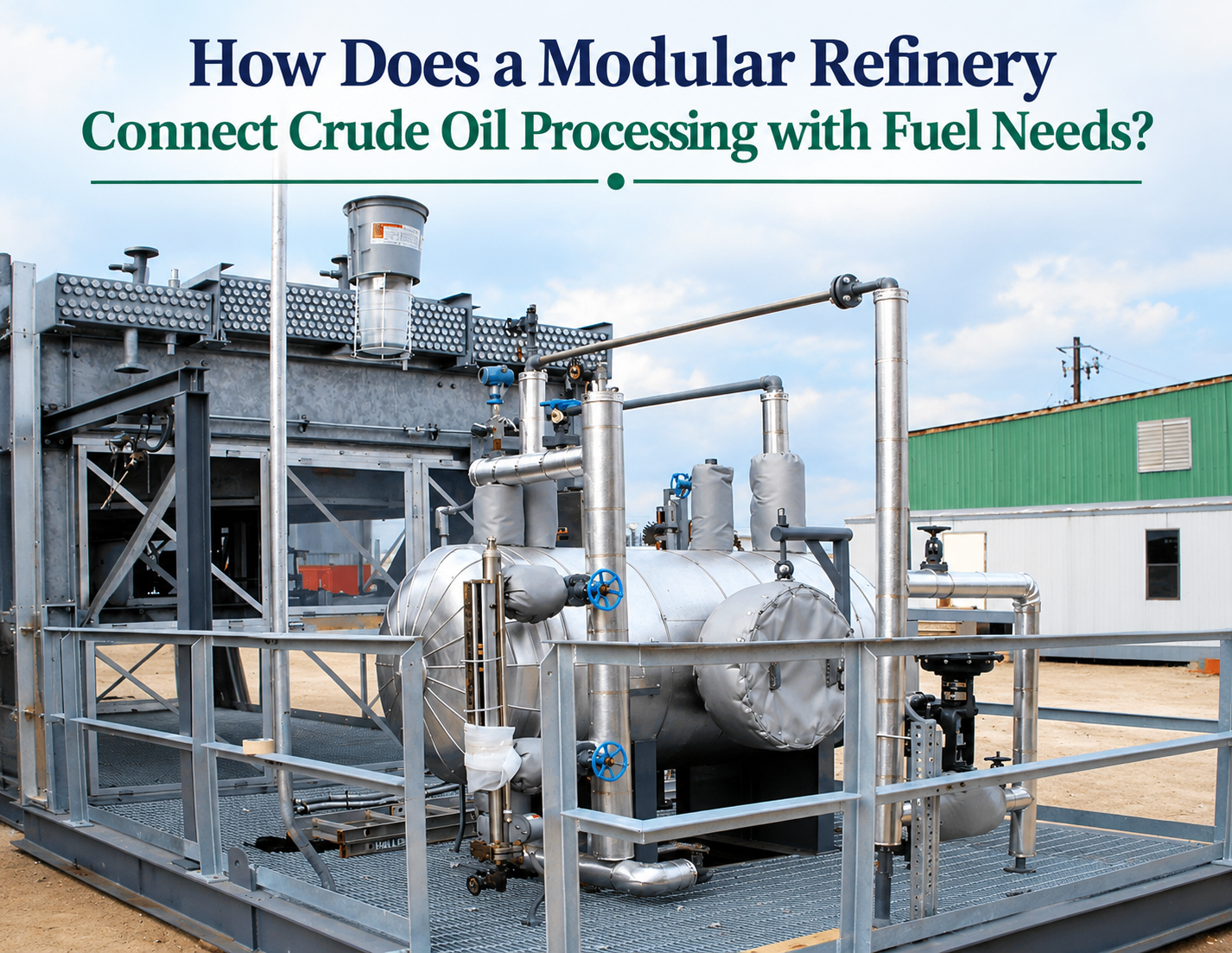
This blog explains how modular refinery systems connect crude oil processing with fuel production. It covers the 1,200 BPD system's capacity, automation, fail-safe features, and key factors businesses should consider when evaluating refining solutions for their operational fuel needs.
Crude oil processing plays an important role in meeting fuel requirements across various industries. A modular refinery connects these needs by processing crude oil into refined fuels through a structured system.
When evaluating a 1200 bpd system crude oil refinery manufacturer, businesses should consider processing capacity, automation, and expected fuel output. Understanding these factors helps organizations assess how on-site refining may support their operational requirements.
Understanding the Connection Between Crude Oil Processing and Fuel Production
Crude oil contains a mixture of hydrocarbons that must be processed to produce usable petroleum products. Refining separates and processes these components into products with different properties and applications. The specific outputs depend on the refinery's design, processing configuration, and the characteristics of the crude oil being processed.
A modular refinery brings the required refining equipment together within a planned system. This approach provides a defined framework for processing crude oil and producing refined fuels. Rather than viewing crude oil processing and fuel production as separate activities, organizations can evaluate how the refinery connects these stages within one operating system.
The intended production capacity also helps establish the scale of the operation. Businesses can consider the amount of crude oil the system is designed to process and how its intended output relates to their operational requirements.
How a 1,200 BPD System Supports On-Site Refining
A refinery's daily processing capacity is an important factor in understanding its intended role. A 1,200 BPD system is designed to process up to 1,200 barrels of crude oil per day, providing a defined capacity for evaluating on-site refining requirements.
Southport Modular's 1,200 BPD crude oil mini refinery system is designed to produce approximately 40,000 to 50,000 gallons of fuel daily. Actual production can depend on factors such as crude oil characteristics, operating conditions, and the refining process..
Businesses reviewing a 1200 bpd system crude oil refinery manufacturer should consider how the system's capacity and intended fuel output relate to their operational goals. Understanding these details provides a useful starting point for evaluating a refining solution.
Why Modular Refinery Design Matters
Modular refinery systems organize refining equipment within a planned configuration. This structure helps bring the components needed for processing together as part of a coordinated system. The arrangement is relevant when businesses assess how a refining solution may fit their operational requirements.
The value of a modular approach depends on the specific system design and the needs of the organization using it. Factors such as processing capacity, site conditions, operating requirements, and implementation planning all deserve attention during an evaluation.
A modular design should not be viewed as a guarantee of lower costs, faster installation, or a particular production outcome. Instead, businesses should review the system's documented capabilities and determine whether its configuration fits their intended application.
The Role of Automation in Refinery Operations
Automation is another important consideration when evaluating a modern refining system. Automated features support the system's operating framework and help coordinate processes according to its design. Understanding how these features work is part of assessing the equipment and its intended use.
Southport Modular's 1,200 BPD system is fully automated and includes run and fail-safe features throughout. These features form part of the system's operating design and are relevant when reviewing how the refinery is intended to function.
Businesses should understand the specific functions of the automation and fail-safe features during technical discussions. They should also review operating procedures, monitoring requirements, maintenance needs, and applicable safety provisions.
Connecting Refinery Capacity With Business Requirements
Selecting a refining system requires more than identifying a daily processing figure. Organizations need to consider how crude oil availability, anticipated fuel demand, site requirements, and operating resources relate to the proposed system.
Several factors can help guide this assessment:
● Crude oil supply: Evaluate the availability and characteristics of the crude oil intended for processing.
● Processing capacity: Determine whether the system's designed daily capacity aligns with anticipated operating needs.
● Fuel-production expectations: Review the expected output and understand how crude oil characteristics and operating conditions may affect production.
● Operating requirements: Consider staffing, monitoring, maintenance, utilities, and other site-specific needs.
● Implementation planning: Review site readiness, installation requirements, and the steps needed before operations begin.
These considerations help businesses connect their fuel requirements with the practical demands of operating a refinery. A clear understanding of these factors can also support more productive discussions with equipment providers and engineering professionals.
Evaluating Refinery Manufacturers in South Atascosa
Choosing a refinery manufacturer involves reviewing the system's technical capabilities, engineering foundation, and suitability for the intended application. Businesses should seek clear information about processing capacity, automation, operating features, and implementation requirements before making a decision.
Organizations researching a 1200 bpd system crude oil refinery manufacturer South Atascosa can begin by examining the manufacturer's experience and the documented capabilities of its refining technology. Technical discussions should focus on the system's intended use, production expectations, operating requirements, and site-specific considerations.
Southport Modular's technology is backed by more than two decades of experience providing rigorously tested technology frameworks. Its senior engineers focus on comprehensive fuel solutions for organizations operating in competitive markets.
Bringing Crude Oil Processing and Fuel Needs Together
A modular refinery connects crude oil processing with fuel production through a system designed around defined processing capabilities and operating features. For businesses considering on-site refining, understanding this relationship helps clarify the role of daily capacity, automation, and expected fuel output in the overall operation.
Southport Modular's 1,200 BPD crude oil mini refinery system provides a specific example of this approach, with a stated processing capacity of up to 1,200 barrels per day and an approximate designed fuel output of 40,000 to 50,000 gallons daily. Evaluating these capabilities alongside crude oil availability, site requirements, and operational goals can help organizations determine whether the system fits their needs.
Discuss Your Refinery Requirements With Southport Modular
Every refining project has its own operational considerations. Contact Southport Modular to discuss your processing requirements, review the system's capabilities, and understand the considerations involved in planning an on-site refining project.
Frequently Asked Questions
1. What is a modular crude oil refinery?
A modular crude oil refinery is a system designed to process crude oil into refined petroleum products. Its equipment is arranged within a planned configuration, with capacity and output depending on the system's design and operating requirements.
2. How much crude oil can a 1,200 BPD refinery process?
A 1,200 BPD refinery system is designed to process up to 1,200 barrels of crude oil per day. Actual processing volumes depend on crude oil availability, operating conditions, and system requirements.
3. How much fuel can a 1,200 BPD mini refinery produce daily?
Southport Modular's 1,200 BPD system is designed to produce approximately 40,000 to 50,000 gallons of fuel daily. Actual output may vary depending on crude oil characteristics and operating conditions.
4. Why is automation important in a modular refinery?
Automation helps coordinate refinery operations according to the system's design. Southport Modular's system is fully automated and includes run and fail-safe features throughout. Businesses should review these features and their operating requirements during technical evaluation.
5. What should businesses consider before selecting a refinery manufacturer?
Businesses should evaluate processing capacity, expected fuel output, crude oil requirements, automation, site conditions, and maintenance needs. Reviewing these factors with the manufacturer helps determine whether the system suits their operational goals.
