

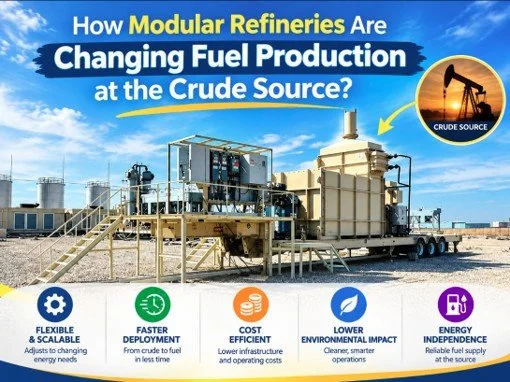
Summary - This blog explains how modular refineries can bring fuel production closer to crude sources. It highlights the benefits of source-level refining, the 1,200 BPD system, automation and safety features, engineering considerations, and key factors businesses should review before selecting a modular refinery.
Fuel production does not always have to depend on large, distant refining facilities. For organizations exploring source-level refining, the option to Buy Crude Oil Refinery South Atascosa can provide a way to bring refining capabilities closer to crude production. Modular technology offers businesses a more direct approach to processing crude while supporting greater control over their fuel-production strategy.
Crude characteristics, site conditions, infrastructure, automation, safety features, and long-term fuel requirements should all be evaluated before selecting a system. A properly engineered modular refinery can provide an integrated approach to converting crude oil into usable fuel while supporting operational goals.
What Is a Modular Refinery?
A modular refinery is a refining system built around engineered components that can be integrated into a focused processing facility. Its design can provide a practical framework for organizations that need defined crude-processing capacity without relying solely on large conventional refining infrastructure.
The design of a modular refinery can account for factors such as crude characteristics, processing capacity, available infrastructure, and fuel-production objectives. This makes proper engineering and project planning important before selecting a system.
For businesses researching local refining options, understanding the equipment's capacity, configuration, operating requirements, and intended fuel output can help establish whether a modular system matches their needs.
Why Refine Crude Oil at the Source?
Traditional fuel supply chains can involve multiple stages between crude production and the final use of refined fuel. Source-level refining offers another approach by bringing processing capabilities closer to where crude oil is produced.
This can be relevant for operations with substantial and ongoing fuel requirements. Oilfield operations, trucking businesses, shipping operations, and other fuel-dependent industries may benefit from a more direct relationship between crude supply and fuel production.
Producing fuel closer to the crude source can also support a broader energy strategy. Instead of treating crude production and fuel consumption as completely separate processes, businesses can explore how refining technology can connect these stages.
Exploring the 1,200 BPD Crude Oil Mini Refinery
Southport Modular's featured solution is a 1,200 BPD crude oil mini refinery designed to process up to 1,200 barrels of crude oil per day. The system is designed to convert crude oil into high-quality diesel at the source.
The published production figure is approximately 40,000 to 50,000 gallons of fuel daily, depending on operating conditions and the crude being processed. The system is also described as fully automated, with run and fail-safe features throughout.
For organizations assessing their refining options, having a defined processing capacity makes it easier to compare equipment with expected crude availability and fuel requirements.
Key Factors to Review Before Selecting a Modular Refinery
Selecting refinery equipment involves more than looking at daily processing capacity. Several technical and operational factors should be reviewed before moving forward.
Crude Oil Characteristics
The characteristics of the crude being processed should be considered during project planning. Different crude supplies can have different properties, so the refining solution needs to be evaluated in relation to the available feedstock.
Processing Capacity
Capacity should reflect the organization's expected crude supply and fuel requirements. A system that is too small may not meet operational needs, while unnecessary capacity may not align with the project's objectives.
The 1,200 BPD capacity offered by Southport Modular provides a defined starting point for organizations assessing their potential source-level refining requirements.
Site Requirements
Available infrastructure and site conditions are also important. Before deciding to Buy Crude Oil Refinery South Atascosa, organizations should evaluate how the proposed system will fit within the intended operating environment.
A thorough assessment can help identify infrastructure considerations before a project moves into implementation.
Automation and Safety
Automation can play an important role in modern refining operations. When organizations evaluate automated refinery systems, they should also review the operating controls and safety features incorporated into the technology.
Southport Modular's 1,200 BPD system is described as fully automated and includes run and fail-safe features throughout the system.
Long-Term Fuel Requirements
The purpose of the refinery should remain central to the planning process. Businesses should consider how much crude they expect to process, how much fuel they need, and how the system fits into their broader operational strategy.
These considerations can help organizations determine whether the proposed capacity and system configuration align with their objectives.
The Role of Engineering in Refinery Planning
A refinery project requires careful technical planning. Capacity, crude characteristics, infrastructure, automation, safety, and production objectives all need to work together.
Southport Modular was established by senior engineers and brings more than two decades of experience in developing and providing technology frameworks. Its engineering-led approach focuses on optimizing infrastructure, streamlining workflows, and supporting measurable growth.
This experience can be valuable during the planning stage, when businesses need to understand how a refining system can fit their operational requirements.
Building a More Direct Fuel Production Strategy
The growing interest in modular refining reflects a broader focus on bringing fuel production closer to crude sources. Instead of relying solely on large-scale refining infrastructure, organizations can evaluate systems designed around specific production requirements.
A 1,200 BPD crude oil mini refinery provides one option for businesses considering source-level fuel production. With its published capacity, automated operation, and integrated fail-safe features, the system is designed around the goal of converting crude oil into high-quality diesel at the source.
For businesses considering their purchasing options, evaluating capacity, operating requirements, automation, and safety features can provide a useful starting point. Those looking to Buy Fully Automated 1200 BPD System South Atascosa can also assess how the system aligns with their crude supply and fuel-production objectives.
Explore Modular Refining With Southport Modular
Choosing refinery equipment is a significant operational decision, making engineering guidance and project planning important parts of the process. Southport Modular provides modular crude oil refining technology designed to help organizations produce fuel at the crude source.
Businesses considering whether to Buy Fully Automated 1200 BPD System South Atascosa can review the system's published specifications and discuss their project requirements through a strategic consultation.
For organizations looking to evaluate source-level refining options, understanding the available technology and determining whether the 1,200 BPD system fits the project's objectives are important steps before moving forward. Contact Southport Modular to discuss your refinery requirements and request a strategic consultation.
Frequently Asked Questions
1. What is a modular refinery?
A modular refinery is a compact, engineered system designed to process crude oil into refined fuel based on specific production requirements.
2. How much crude can the Southport Modular system process?
The Southport Modular system can process up to 1,200 barrels of crude oil per day and produce approximately 40,000–50,000 gallons of fuel daily.
3. Is the 1,200 BPD refinery fully automated?
Yes. The system is fully automated and includes run and fail-safe features throughout for structured operation.
4. Why refine crude oil at the source?
Source-level refining can give businesses a more direct approach to fuel production while reducing dependence on external refining infrastructure.
5. What should I consider before purchasing a modular refinery?
Consider crude characteristics, processing capacity, site requirements, automation, safety features, and your long-term fuel needs.
